Showing posts with label families. Show all posts

Wednesday, September 24, 2014

Unaccompanied Minors Part 2: Integrating UAC into the School Community

As I mentioned in my last post, many of the unaccompanied minors that come to our country are escaping horrible circumstances in their home countries that many of us cannot fathom. As a result, when they get here, they may have more trouble than other newcomers adjusting to their new home and school. The purpose of this post is to help teachers make these students feel comfortable in school.


Be sensitive to signals.
We cannot outright ask our students about their immigration status or how they came here (sometimes families and students will volunteer the information if they feel safe). But, we must still be sensitive to their life story. Remember- some of these kids have seen violence and poverty we cannot even fathom. If a student seems apprehensive or afraid, do what you can to make that student feel at ease. Be sensitive to signals that the student may be experiencing psychological distress or problems at home.

Help where you can.
Once, when I was teaching in North Carolina, I was split between a middle school and an elementary. At the elementary level, we had a student come from a tropical country in winter. He had NO winter clothes or coats. I asked my middle school students to bring in any old uniforms that they could no longer wear, as well as gloves, hats scarves or coats. The elementary student was SO happy (and his family SO appreciative) to receive those clothes.

When I taught 4th grade ESOL, I would keep pencils and erasers on hand to "sell" to those students who never seemed to bring a pencil. Pencils were $.10 and erasers were $.05. It was hard for them to get their parents to go to the store, but with a few cents they could "buy" one from me. That money went into a fund to buy lunch for students who forgot their money or didn't have money. Finding small ways to do what you can for these kids can make a big difference!

Also know what services are available in the community that you can refer the families to- especially those that speak Spanish. There are often immigration support services available, small services from social services, and food pantries.

Always be ready with a smile and a hug.
Sometimes that's all they need. Show them that you are happy to see them each day and that you are excited by what they are learning and the progress they are making. Sometimes they really want to learn and knowing that someone believes in them can be powerful.

Understand that they're not all in the same place.
Some of these kids come here with little or no education- and not by choice. Sometimes gangs control the road between the home and the nearest school. If the family cannot afford to pay the gang to use the road, the children cannot go to school. Understand that remediation may be necessary or that some of these kids have seriously interrupted educational experiences- but they really want to learn. Often, they are highly motivated, but in need of a great deal of help.

I hope these posts on UAC help you understand what you these kids are going through and help you to serve them better. I will continue with more posts as more information and ideas become available.


Sunday, September 14, 2014

Unaccompanied Minors Part 1: The who, what and why

In my line of work, I have the opportunity to work with students from all over the world and all walks of life. Lately in the media, there has been a lot of attention given to unaccompanied minors coming into our country and enrolling in our public schools. The vast majority of the public has little or no understanding of the circumstances under which these students are coming unto the United States. My goal here is to let you know a little more about these unaccompanied youth, where they're coming from, why they're here, and where they're going. 

Who are unaccompanied minors?
In recent years, we've seen a large surge of minors coming alone to the United States. Many of these children are caught crossing the border illegally and taken into custody by ICE (Immigration and Customs Enforcement). In the past, the vast majority of these students have been high-school aged boys, however recent years have seen a surge in younger children and females coming as well.

Where are they coming from?
Currently, most of these youths are coming from Guatemala, Honduras, and El Salvador. 


Why are they coming to the US?
The countries that these children are coming from are torn by violence, war, poverty and corruption. Homicide and violence rates have dramatically risen in the "Northern Triangle" of Central America in the past few years. The Northern Triangle is comprised of Guatemala, Honduras, and El Salvador.


Many of these students have been victimized by organized crime (gangs or cartels)- many have lost their homes, family members, family businesses. They have no  hope left in their homes, and many children are threatened with death if they refuse to join the gangs or cartels. Others have been removed from their home countries by force and have been trafficked illegally into the United States. All of these kids simply want a good education and a better life.This is an excellent video to explain a little more:


What happens once they get here?
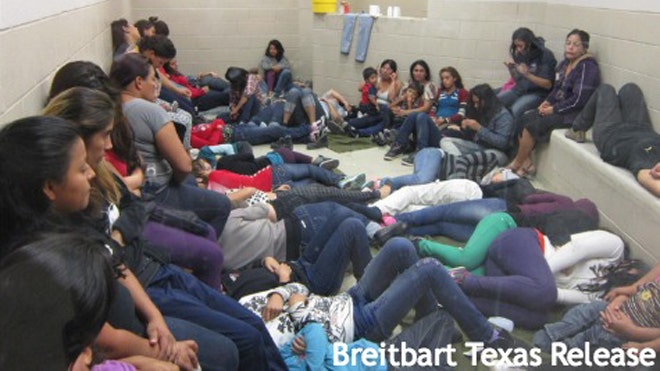
By law, minors coming from countries that do not border the US are required to be handed over to the HHS (Health and Human Services). HHS is required to house these students, feed them, provide medical care until they can be handed over to the custody of a sponsor- usually a family member- until they can undergo legal immigration proceedings. They are housed in large facilities with many other children. They may spend months there before a family member or acceptable sponsor can be found. 


The children are then released into the custody of their sponsor. The sponsor must be able to care for the physical and mental well-being of the child, as well as pass a background check. The sponsor must also agree to ensure the child’s presence at all future immigration proceedings. They also must agree to ensure the minor reports to ICE for removal from the United States if an immigration judge issues a removal order or voluntary departure order. 

Where are they going?
These children go to live with the individuals or families who sponsor them. Below is a table from HHS showing how many unaccompanied minors have been released to each state with a sponsor since January 1.
State# of UAC
Alabama515
Alaska
5
Arizona203
Arkansas
209
California
3909
Colorado
263
Connecticut
394
Delaware141
District of Columbia
238
Florida
3809
Georgia
1412
Hawaii
8
Idaho13
Illinois377
Indiana
309
Iowa
159
Kansas
207
Kentucky
284
Louisiana
1275
Maine12
Maryland2804
Massachusetts
989
Michigan
124
Minnesota
202
Mississippi202
Missouri
146
Montana
1
Nebraska232
Nevada163
New Hampshire
24
New Jersey
1877
New Mexico
28
New York
4244
North Carolina1429
North Dakota4
Ohio
405
Oklahoma
241
Oregon
73
Pennsylvania
456
Puerto Rico
1
Rhode Island
148
South Carolina
434
South Dakota
27
Tennessee
909
Texas
5280
Utah
85
Vermont3
Virginia
2856
Virgin Islands
4
Washington
265
West Virginia12
Wisconsin
60
Wyoming
7
Total
37477


I hope this serves to clear up any confusion you might have about the process these children undergo. Next time I post, I will discuss some of the special challenges educators might face in integrating these children into the school community, and how to address those challenges.


Tuesday, August 26, 2014

Engaging the families of English Language Learners

Every time I present or talk to classroom teachers about their English Language Learners, one of the greatest frustrations they have is finding ways to get the families of their English Language Learners involved. In addition to language barriers, there are often cultural barriers which make it difficult to get these families involved in the school culture.


Value their home language and culture.
One of the most important things that you can do is make the parents feel comfortable by valuing their home language and culture. If the students (and families) do not feel like you value their culture and language, the student's sense of self-worth and sense of identity can be negatively impacted.

Remember parents are the child's first teacher. They possess a wealth of knowledge, family tradition and experience that they can pass on to their children. Encourage parents to continue to work with the child in their native language. They can read stories and ask questions in their native language. They can do every day math tasks with the child in the native language (ie- "We need one potato for each member of the family. How many potatoes do we need?"). Encourage parents to continue working with their children and teaching them about the way the world works in their native language.

Learn about any cultural differences that may cause problems in school so that you can be prepared. For example, I once had a student from Ghana who would not look at me when I spoke to him. It seemed very disrespectful to me, until I spoke to his father. His father was able to tell me that it was a sign of respect in their country to look slightly down when being spoken to by a teacher.

Names are very important in many cultures, and are closely tied to a person's identity. Be sure that you learn how the child/parents like to address the child and pronounce the child's name, and address the child that way. Do not automatically shorten or "Americanize" a child's name unless the child or parents tell you s/he prefers such a nickname.

Make your classroom a culturally welcoming place.
Find ways to learn about and respect the different cultures of your students on a daily basis. Learn to say a few words in students' native languages. Provide translators for parent conferences or back-to-school nights. Send home translated documents to make things easier for parents. Invite parents to volunteer in your classroom or school- and find jobs that they can do with little or no English.

Consider holding international family events where families can share their language and culture with other families in the school. Incorporate classroom activities or stories that relate to the different cultures present in your classroom. Have students complete activities for homework that require them to talk to their parents about their family history, traditions, home country or culture.

Contact families frequently.
Keeping in contact with families, especially the families of your English language learners is very important. It may take a little more effort, but these parents want to know about their child's progress and what s/he is learning as much as any other parent.

One thing I notice is that many of the teachers I've worked with do not generally contact the parents of their ELLs unless they have an academic concern or behavioral problem. I encourage my teachers to reach out to all parents, but especially the parents of their ELLs when they have good news, too. A simple note home (in the native language) that says "Jose worked really hard in math class today!" can go miles for making connections with the family and for showing them how much you care about their child.

On a very important note, while sending home documents translated into the family's native language is important, don't automatically assume that just because you sent it home translated, the parent will be able to read it. In my job, I've often worked with parents who are not literate in their native language.


I hope these tips help you engage the families of your English language learners as you start another school year!


Monday, November 11, 2013

Working with an interpreter

This is a continuation of the series that I started earlier this school year called, "Putting the Pieces Together for Effective ESOL". This post addresses how to work with an interpreter.


Today was parent-teacher conference day in our district. Since our district has over 17,000 ESOL students, interpreters were in high demand today! Our Office of Interpreting and Translating did not have enough Spanish interpreters to cover all of the requests. Being in the central ESOL office and not having to conduct conferences of my own, I was asked to step in and interpret at one of the schools I work with. While there, I realized that many teachers do not know how to work with an interpreter!

Schedule the interpreter ahead of time.
Especially if you live in a district with a limited number of interpreters or a high ELL population, be sure to put your request in with the interpreter's office as soon as you know the dates of conferences. This will ensure that you will be at the top of the list to receive an interpreter. Do not assume that your ESOL teacher will schedule an interpreter unless the two of you have discussed and agreed upon this. The ultimate responsibility for scheduling the interpreter lies with the classroom teacher.

Speak slowly, be succinct, and chunk your speech.
I want to interpret for the parent what you are saying as quickly as possible. If you talk for 10 minutes about Hector before stopping, I'm not going to remember and be able to communicate everything that you've said. Instead, slow down, and break your thoughts or ideas down into chunks of speech no longer than 6-8 sentences at a time. Similarly, be succinct in what you want to say- limit extraneous information, communicate only the most important ideas and expound only when necessary.

Look at the parent you are conversing with, not the interpreter.
As the interpreter, I will be looking at you because I am listening and interpreting what you say. However, you are not talking to ME, you are talking to the parent and that is who you should be looking at. Many parents who do not speak English still feel left out after leaving a conference with the teacher because the teacher talked to the interpreter, rather than to them.

Be sure to ask the parents if they have any questions.
Even teachers who do this in every other conference, often forget to do this when there is an interpreter present. The interpreter is there to translate what you say, and may not add extra information or ask if the parent has questions- that is YOUR job, so do not assume that the interpreter will do it.

I hope these tips for working with interpreters help you to lead successful, inclusive parent-teacher conferences!


Sunday, March 18, 2012

Reaching out to the families of your English Language Learners

So, you have my deepest apologies that I have been MIA. I came down with the FLU! The last time I had the flu was when I was in college 10 years ago and got it as a result of the flu shot. Therefore, I don't get the shot, and I also don't usually get the flu.....until this year! Wowie......does it really take it out of you!

On the upside though, I'm feeling better and starting to get back in action. I don't have a great, new or exciting product to share with you right now. I can tell you about my Elementary Geometry Vocabulary Matching Cards, or you can head over to The Lesson Cloud and read all about them!

Today, I really wanted to discuss with you some ways that you can connect to the families of your English language learners. Every school that I have worked at has struggled with bringing in families to school events and PTA meetings, other than events where students were performing. At many of the schools I have worked at, this has been due to the fact that 2/3 or more of the school's population was LEP (Limited English Proficient). Often, due to cultural reasons, work reasons, and a myriad of other reasons, LEP parents are less likely to attend school functions and be actively involved in their student's education if they don't speak English.


I believe that parent involvement, whether in the home or at school, in English or the native language, is an important part of the school and learning experience, and this is especially true for LEP students. So, how can you help your LEP parents, especially those who don't speak English, to become more involved in their child's school experience?

Find out what times work best for your LEP parents and be flexible.
At many of the schools that I worked at, our LEP parents did not attend after-school events because they were working. In my experience, LEP parents often depend on older children to watch younger children in the evenings so they can work. Therefore, their days were free. We got huge response from our LEP parents by holding informational breakfasts. We would also set aside an area with activities and snacks for non-school age children with a staff assistant to monitor them so that parents could focus on the information they were receiving. Work with the ESOL Specialist at your school to make an event happen for your LEP parents.

Provide translators for informational sessions and school events.
Many LEP parents don't speak English themselves. The ones who do may still struggle to keep up with the pace of discussion at meetings or events. Most school districts with large numbers of LEP students receive Title III funds which can be used to purchase translators for events and document translation services. If parents know that they will be able to understand what is going on, ask questions, and participate, they will be more likely to show up. Would you go to a meeting that was held in Russian if you didn't speak Russian?

Show parents how much you appreciate their culture and diversity.
Hold schoolwide celebrations of cultural events like Hispanic Heritage Month, Asian Heritage Month, Cinco de Mayo, Lunar New Year, and other relevant cultural holidays to provide students the opportunity to learn about lots of different cultures. Invite students and their families to share cultural artifacts, recipes, experiences, music, and more.
Furthermore, encourage parents who don't speak English to practice math, reading and writing skills in the native language with their students. Students who have a strong foundation in their native language are usually more successful in acquiring a second language. This shows parents that you value their knowledge, language, culture, and contribution to their child's education.

Make use of community resources.
If your school has a large population of Peruvian immigrants, for example, then there are likely to be more than one Peruvian owned restaurant or business nearby. Visit those business and see if they would be willing to donate items for your parent meeting- food, door prizes, etc. Learn about other community organizations that speak the native languages of your LEP families and that can provide support and other services for them so that you can make this information available to families.

Provide volunteer opportunities for your LEP parents.
Find some tasks in your school that require little or no English proficiency, such as making copies, stuffing envelopes, or assembling bulletin boards. Make these available as volunteer opportunities for your LEP parents. If you have parents who are bilingual, ask them to volunteer to translate for school events or as a parent liaison.  

I hope these tips will help you to reach out to the families of your LEP students and help them become involved in their child's education. If you'd like more tips on the subject, check out this website.